
Putting on socks can become surprisingly difficult when flexibility, mobility, or joint comfort begins to change. Arthritis, joint stiffness, back discomfort, and other age-related challenges can turn a simple daily task into a frustrating one.
Sock aids for seniors who have trouble bending over are designed to help people put on socks without reaching all the way to their feet. For many older adults, this simple dressing tool can make getting dressed easier, reduce frustration, and support greater independence at home.
If you are considering a sock aid for yourself or a loved one, understanding the different types available and the features that matter most can help you choose a device that fits your needs.
Why Putting on Socks Becomes Harder After 50
Several age-related changes can make bending down more difficult.
Common reasons include:
- Arthritis
- Hip stiffness
- Knee pain
- Back discomfort
- Reduced flexibility
- Balance concerns
- Recovery after surgery
Even individuals who remain active may notice that reaching their feet becomes less comfortable over time.
Tasks such as putting on socks, shoes, or compression garments may gradually require more effort than they once did.
How Sock Aids for Seniors Work
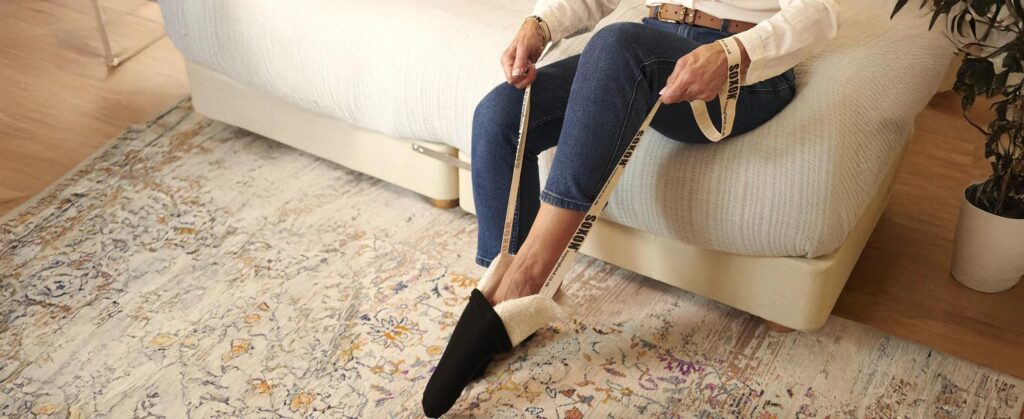
Most sock aids use a flexible or semi-rigid cradle that holds the sock open.
The user places the sock onto the device, lowers it to the floor using attached handles or cords, and then slides their foot into the sock while pulling upward.
The process reduces the need to:
- Bend deeply
- Twist awkwardly
- Reach toward the feet
- Balance on one leg
Many people find the device becomes easier to use after a few practice sessions.
Benefits of Sock Aids for Seniors Who Have Trouble Bending Over
A sock aid is not simply a convenience item. For some individuals, it can make daily dressing significantly easier.
Potential benefits include:
- Greater independence
- Less strain on the back
- Reduced bending
- Easier morning routines
- Increased confidence when dressing alone
- Improved accessibility after surgery or injury
For many users, the biggest advantage is being able to put on socks without assistance.
Types of Sock Aids for Seniors
Several designs are available, and the best choice depends on individual mobility and flexibility needs.
Flexible Sock Aids
Flexible models use a soft or semi-flexible cradle.
Benefits may include:
- Lightweight design
- Easy storage
- Comfortable sock positioning
- Adaptability to different sock types
These are among the most common styles sold today.
⇒ See your choice of flexible sock aids here at Amazon
Rigid Sock Aids
Rigid models use a harder shell structure.
Some users prefer them because they:
- Hold their shape well
- Keep socks open more easily
- Require less adjustment
They may work particularly well for individuals with limited hand dexterity.
⇒ See your choice of rigid sock aids here
Sock Aids With Long Handles
Certain models include extended handles rather than cords.
These may benefit people who:
- Have limited grip strength
- Experience arthritis in their hands
- Prefer a more rigid control system
⇒ See your choice of long-handle sock aids here
Compression Sock Aids
Compression socks can be difficult to put on because of their tighter fit.
Specialized sock aids are designed specifically for:
- Compression stockings
- Medical compression socks
- Firm support hosiery
These devices may simplify a task that many users find challenging.
⇒ See your choice of compression sock aids here
Features to Look for Before Buying
When comparing sock aids for seniors who have trouble bending over, several features deserve attention.
Cord Length
Longer cords may be helpful for users with significant flexibility limitations.
Adjustable cords can provide additional convenience.
Grip Handles
Comfortable handles may make the device easier to control.
Look for:
- Foam grips
- Ergonomic handles
- Non-slip surfaces
Compatibility With Different Socks
Not every sock aid works equally well with every type of sock.
Consider whether you regularly wear:
- Athletic socks
- Dress socks
- Thick winter socks
- Compression socks
Ease of Storage
Many users appreciate lightweight designs that can be stored in a drawer or closet when not in use.
Sock Aid Comparison
| Type | Ease of Use | Portability | Best For |
|---|---|---|---|
| Flexible Sock Aid | Very Good | Excellent | Everyday use |
| Rigid Sock Aid | Excellent | Good | Limited hand dexterity |
| Long-Handle Sock Aid | Very Good | Moderate | Reduced grip strength |
| Compression Sock Aid | Good | Moderate | Compression garments |
Additional Tips for Easier Dressing
A sock aid can be even more effective when combined with other dressing strategies.
Helpful tips include:
- Sit in a stable chair while dressing
- Use good lighting
- Keep frequently worn socks within reach
- Dress slowly and carefully
- Consider long-handled shoehorns when needed
Small adjustments can make dressing routines more comfortable and less tiring.
Common Mistakes to Avoid
Some users become frustrated because they choose a device that does not match their needs.
Common mistakes include:
- Purchasing the wrong style
- Ignoring cord length
- Choosing a device that is too small for thicker socks
- Expecting immediate mastery without practice
- Overlooking compression-sock compatibility
Taking a few minutes to learn proper technique often improves results.
Frequently Asked Questions
Do sock aids really work?
Many people find sock aids effective for reducing the need to bend while putting on socks. Most users improve with practice.
Are sock aids difficult to use?
There may be a learning curve initially, but many individuals become comfortable using them after a few attempts.
Can sock aids be used after hip surgery?
Some people use sock aids during recovery periods because they help reduce bending. Always follow medical guidance regarding movement restrictions.
Do sock aids work with compression socks?
Certain models are designed specifically for compression garments and may work better than standard sock aids.
Are sock aids worth buying?
For individuals who struggle to reach their feet, a sock aid may improve independence and make daily dressing easier.
You may also find this article helpful:
⇒ Reachers and Grabbers for Seniors: Everyday Tasks Made Easier
Cleaning With Arthritis After 50: Tools and Tips for Easier Housework
Final Thoughts
Sock aids for seniors who have trouble bending over can be a simple yet effective solution for making daily dressing easier. By reducing the need to bend, twist, and reach toward the feet, these devices may help older adults maintain independence and confidence during everyday routines.
Understanding the different styles, features, and limitations can help you choose a sock aid that fits your mobility needs and makes getting dressed a little easier each day.
Affiliate Disclosure:
Some links in this article may be affiliate links. As an Amazon Associate, PowerAt50Plus earns from qualifying purchases at no extra cost to you.
Sam Ammouri