
Many everyday household tasks become more challenging when arthritis affects the hands, wrists, or shoulders. Cleaning is a common example. Simple activities such as sweeping, mopping, or scrubbing can place repeated stress on painful joints, making chores more uncomfortable than they used to be.
The good news is that cleaning does not always require more effort. In many cases, the right tools and a few small adjustments can help reduce strain and make household tasks easier to manage.
If arthritis is making cleaning more difficult, here are several tools and techniques that may help protect your hands and wrists while keeping your home tidy.
Why Cleaning Can Be Difficult With Arthritis
Arthritis often affects the joints that are used most frequently throughout the day. Cleaning tasks typically involve gripping handles, twisting wrists, squeezing triggers, reaching overhead, and repetitive motions that can irritate sensitive joints.
Common challenges include:
- Difficulty holding thin handles
- Wrist pain while sweeping or mopping
- Hand fatigue during longer cleaning sessions
- Shoulder discomfort when reaching or scrubbing
- Reduced grip strength
Because these movements are repeated over and over, even a short cleaning session can leave joints feeling sore or stiff.
What to Look for in Cleaning Tools for Arthritis
Not every cleaning product is designed with joint comfort in mind. When shopping for household tools, certain features can make a noticeable difference.
Look for:
- Lightweight construction
- Wide, cushioned handles
- Ergonomic grip designs
- Long handles that reduce bending
- Tools that minimize twisting motions
- Adjustable lengths for better posture
These features can help distribute force more evenly and reduce stress on smaller joints in the hands and wrists.
Helpful Tools That May Make Cleaning Easier
The following cleaning tools may help reduce strain on arthritic hands, wrists, and shoulders while making everyday household chores easier to manage.
1- Ergonomic Broom and Dustpan Sets
Traditional brooms often require bending, reaching, and gripping narrow handles for extended periods.
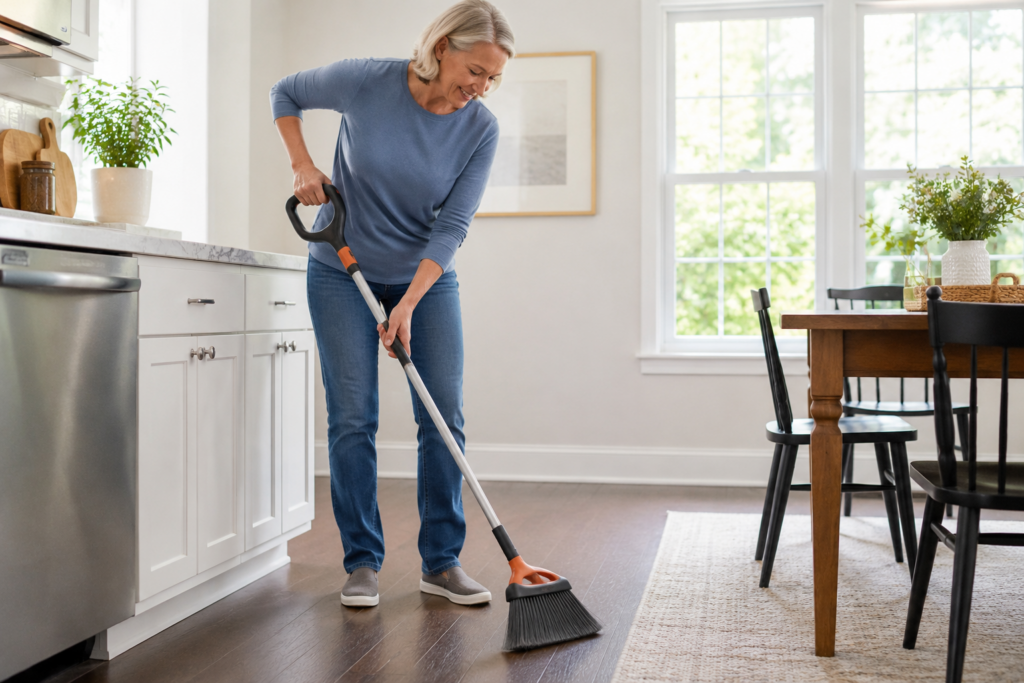
An ergonomic broom and dustpan set typically includes thicker handles and a stand-up dustpan design that allows you to clean without bending as much. This can reduce strain on the wrists, back, and knees while making everyday sweeping more comfortable.
2- Foam Grip Tubing
One of the simplest and most affordable solutions is adding foam grip tubing to existing cleaning tools.
These soft foam sleeves slide over broom handles, mops, scrub brushes, and other household tools. By increasing the diameter of the handle, they allow you to maintain a more relaxed grip.
Many people with arthritis find that wider handles are easier to hold than thin, hard surfaces.
3- Adapted Tool Handles
Several companies offer attachment handles that clamp onto existing cleaning tools.
These attachments create a larger gripping surface and change the angle of use, helping shift some of the workload away from smaller hand and wrist joints.
For people with reduced grip strength, adapted handles can make certain chores easier to perform without discomfort.
4- Lightweight Microfiber Mops
Heavy wet mops can place considerable stress on the wrists and shoulders.
Microfiber mops are often much lighter and require less effort to maneuver across floors. Many models also feature swivel heads that reduce the need for awkward wrist movements while cleaning around furniture.
5- Long-Handled Scrub Brushes
Scrubbing bathtubs, showers, and floors can be particularly difficult when arthritis affects the hands or knees.
Long-handled scrub brushes allow you to clean larger areas while standing upright. This reduces both bending and the force required from your hands.
6- Reachers and Grabbers
Cleaning often involves picking up dropped items, moving lightweight objects, or reaching into difficult spaces.
A reacher or grabber tool can help reduce unnecessary bending and stretching while protecting painful joints.
Many adults find these tools useful not only for cleaning but also for daily household tasks.
Cleaning Techniques That May Reduce Joint Strain
The right tool can help, but how you use it matters as well.
Use Your Body Instead of Your Wrists
When sweeping or mopping, try to move your entire body rather than relying on wrist movements alone.
Shifting your weight from one foot to the other can help reduce stress on smaller joints.
Push Instead of Pull
Pushing cleaning tools often places less strain on the wrists than pulling them repeatedly.
Pay attention to which movement feels more comfortable and adjust your technique when possible.
Work in Short Sessions
Many people try to finish all cleaning tasks at once, which can lead to increased pain and fatigue.
Breaking chores into shorter sessions throughout the day may be easier on the joints and can help prevent overuse.
Alternate Tasks
If a particular movement causes discomfort, switch to a different task for a while before returning to it.
Changing activities helps avoid repeating the same motion continuously.
When It May Be Time to Modify Your Cleaning Routine
There is no rule that says household chores must be done exactly the way they were years ago.
As arthritis progresses, it may make sense to adjust expectations and look for ways to reduce physical demands. This could mean using more lightweight tools, cleaning one room at a time, asking family members for assistance, or considering occasional professional help for more demanding tasks.
Protecting your joints today may help you stay active and independent longer.
If arthritis affects more than just your cleaning routine, you may also be interested in our guide to managing everyday arthritis challenges after 50.
⇒ Moving Freely After 50: 7 Natural Ways to Manage Arthritis and Joint Pain
⇒ Low-Impact Exercise for Arthritis After 50: Soft and Gentle Ways to Stay Active
⇒ Turmeric for Arthritis After 50: Why Many People Use This Golden Spice for Joint Comfort
Final Thoughts
Cleaning with arthritis can be frustrating, but the right tools and techniques can make a meaningful difference. Simple changes such as using wider grips, lighter equipment, and ergonomic designs may help reduce strain on the hands and wrists while making household chores more manageable.
The goal is not to clean faster or work harder. It is to find practical ways to stay comfortable, protect your joints, and maintain your independence while taking care of your home.
Affiliate Disclosure:
Some links in this article may be affiliate links. As an Amazon Associate, PowerAt50Plus earns from qualifying purchases at no extra cost to you.