
Do Nighttime Bunion Splints Work?
A bunion can make everyday activities uncomfortable. Walking, standing for long periods, and even finding comfortable shoes can become more difficult when the joint at the base of the big toe begins to change shape.
Many people looking for non-surgical relief come across nighttime bunion splints. These devices are designed to hold the big toe in a straighter position while you sleep. They are often marketed as a simple way to reduce discomfort and improve toe alignment without surgery.
But do nighttime bunion splints actually work?
The answer depends on what you expect them to do. Some people notice improvements in comfort and flexibility, while others expect permanent correction and end up disappointed. Understanding the realistic benefits and limitations of nighttime bunion splints can help you decide whether they are worth trying.
What Are Nighttime Bunion Splints?
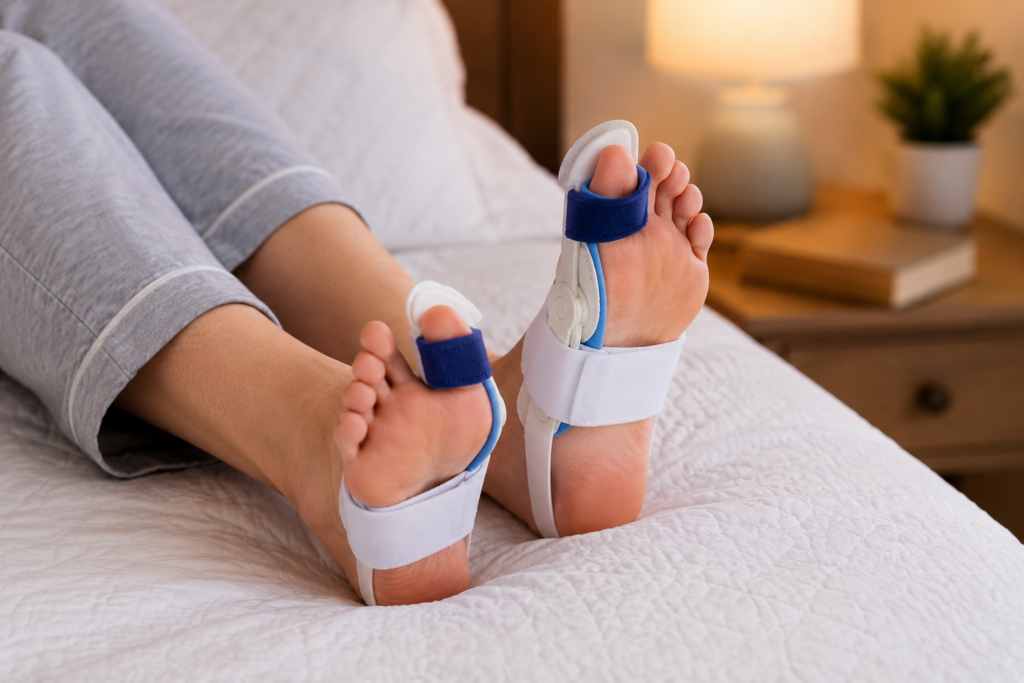
Nighttime bunion splints are devices worn while sleeping that gently position the big toe into a more natural alignment.
Most designs include:
- A toe support
- Adjustable straps
- A brace that helps separate the big toe from the second toe
The goal is not to force the bunion back into place overnight. Instead, the splint applies gentle pressure that may help reduce strain on surrounding tissues and improve comfort.
People often try them before considering more aggressive treatment options.
Do Nighttime Bunion Splints Work?
This is the question most people ask before purchasing one.
The short answer is that nighttime bunion splints may help relieve discomfort and improve toe positioning while they are being used, but they do not permanently eliminate a bunion.
A bunion develops when the joint gradually shifts out of alignment. Because the underlying bone structure has changed, a splint cannot reverse that process permanently.
However, many users report benefits such as:
- Reduced pressure around the joint
- Improved comfort in the morning
- Less stiffness
- Better awareness of toe positioning
The American Academy of Orthopaedic Surgeons notes that non-surgical treatments may help manage symptoms even though they do not remove the bunion itself.
What Nighttime Bunion Splints Can and Cannot Do
The table below compares realistic expectations.
| What They May Help With | What They Cannot Do |
|---|---|
| Reduce discomfort | Permanently remove a bunion |
| Improve toe positioning during use | Reshape bone structure |
| Stretch soft tissues | Replace medical treatment when needed |
| Reduce joint pressure | Guarantee long-term correction |
| Improve comfort while sleeping | Work equally well for everyone |
Understanding these differences can help prevent frustration.
What to Expect During the First Few Nights
Many people assume a bunion splint will feel comfortable immediately. That is not always the case.
The first few nights often involve an adjustment period.
You may notice:
- Mild pressure around the big toe
- Increased awareness of your foot while sleeping
- Minor discomfort from the straps
- Difficulty keeping the splint on throughout the night
This does not necessarily mean the device is ineffective.
Starting with shorter wear periods can help your foot adapt. Many people begin by wearing the splint for a few hours before attempting a full night.
The goal is gentle positioning, not aggressive correction.
Benefits of Nighttime Bunion Splints
For some people, the biggest benefit is improved comfort rather than visible correction.
Potential benefits include:
Reduced Joint Pressure
The splint may reduce stress on the bunion by encouraging a more natural toe position.
Less Morning Stiffness
Some users report that their feet feel more flexible when they wake up.
Increased Comfort During Daily Activities
When discomfort is reduced overnight, walking and standing may feel easier the next day.
A Non-Surgical Option
Many adults prefer trying conservative measures before discussing surgery with a healthcare professional.
Who May Benefit Most From Nighttime Bunion Splints?
Results vary from person to person, but nighttime bunion splints may be most useful for:
- Mild to moderate bunions
- Early-stage bunion discomfort
- People seeking non-surgical symptom management
- Individuals looking to improve toe flexibility
- Those wanting additional support alongside proper footwear
People with severe bunions may experience more limited results.
Other Helpful Ways to Manage Bunion Discomfort
Nighttime splints are only one piece of the puzzle.
Many people find the best results come from combining several approaches.
Wear Shoes With a Wider Toe Box
Tight shoes can increase pressure on the bunion.
A wider toe box gives the toes more room and may improve comfort throughout the day.
Looking for footwear that places less pressure on sensitive joints?
⇒ See your choice of wide-toe-box shoes here at Amazon
Use Bunion Pads
Protective pads can reduce friction and pressure when walking.
Extra cushioning can make daily activities more comfortable.
⇒ See your choice of bunion cushions and pads here
Consider Toe Spacers
Some people use toe spacers during rest periods to help maintain separation between the toes.
⇒ See your choice of toe spacers here
Stay Active
Gentle foot and toe exercises may help maintain mobility and flexibility.
You may also find helpful information in Common Foot Problems That Become More Noticeable After 50
Why Do My Feet Hurt All the Time After 50? 5 Ways to Care for Tired, Aching Feet
When to Talk With a Healthcare Professional
A bunion should not automatically mean surgery is necessary.
However, medical advice may be appropriate if you experience:
- Severe pain
- Difficulty walking
- Rapid worsening of the deformity
- Persistent swelling
- Reduced mobility
A podiatrist or orthopedic specialist can evaluate the condition and discuss available treatment options.
Frequently Asked Questions
Can nighttime bunion splints cure a bunion?
No. Nighttime bunion splints cannot permanently remove a bunion or reshape the affected bone.
How long should I wear nighttime bunion splints?
Many people wear them while sleeping, but comfort levels vary. Following the manufacturer’s instructions is recommended.
Are nighttime bunion splints uncomfortable?
Some users experience mild discomfort during the first few nights as the foot adjusts to the device.
Do nighttime bunion splints work for severe bunions?
Results are generally more limited when bunions are advanced or significantly affect joint structure.
Can I wear a bunion splint during the day?
Some lightweight designs are intended for daytime use, but many splints are specifically designed for overnight wear.
Final Thoughts
Nighttime bunion splints may help improve comfort, reduce pressure on the joint, and support better toe positioning while they are being worn. For people with mild to moderate symptoms, they can be a useful part of a broader foot-care routine.
The key is having realistic expectations. Nighttime bunion splints are not a cure and cannot permanently reverse a bunion. Their greatest value often comes from symptom relief and improved comfort rather than structural correction.
If discomfort continues to interfere with daily activities, speaking with a healthcare professional can help you explore additional treatment options.
Affiliate Disclosure:
Some links in this article may be affiliate links. As an Amazon Associate, PowerAt50Plus earns from qualifying purchases at no extra cost to you.
Sam Ammouri
Founder, PowerAt50Plus.com