
Staying active after 50 doesn’t always come down to finding time for exercise. For many people, the challenge is simply fitting anything extra into an already busy day, especially when energy isn’t always consistent.
What often gets overlooked is that your daily routine already includes movement. Small actions—like doing laundry, washing dishes, or making the bed—require coordination, balance, and effort. The difference is not in adding more to your day, but in becoming aware of how your body moves during these moments.
When you shift that awareness, everyday chores stop being something you rush through and start becoming a steady, reliable way to stay active. Over time, this builds strength, improves balance, and supports your energy—without ever feeling like exercise.
The Problem: Daily Movement Slowly Disappears
Movement doesn’t disappear overnight. It fades quietly.
You might notice:
Standing Less Throughout The Day
Sitting More Between Tasks
Finishing Chores As Quickly As Possible
These patterns feel efficient. You save time, reduce effort, and avoid strain. But gradually, your body starts adapting to doing less.
That leads to:
- Reduced flexibility
- Lower strength
- Less stability during movement
And because it happens slowly, it’s easy to overlook.
What’s Really Happening (In Real Life Terms)
Your body responds to repetition.
If your daily routine includes limited movement, your body adjusts by:
- Using fewer muscles
- Reducing coordination
- Becoming less responsive
But here’s what matters:
👉 You don’t need workouts to reverse this
👉 You need consistent, natural movement
Even simple daily movements fall under something called Non-Exercise Activity Thermogenesis (NEAT), which is just a way of describing the energy your body uses outside of structured exercise.
TheCleveland Clinic highlights how simple, low-impact movement at home plays an important role in maintaining health over time.
That’s where daily chores become valuable.
What People Overlook
Most people treat chores as tasks to finish—not opportunities to move.
They:
Rush Through Cleaning
Use The Same Side Of The Body Repeatedly
Avoid Slightly Challenging Movements
Rely On Shortcuts To Save Effort
Over time, this creates:
- Imbalance in the body
- Reduced coordination
- Missed chances to maintain strength
The task gets completed—but your body gains nothing from it.
Turning Everyday Chores Into Gentle Movement
This isn’t about turning your home into a workout space.
It’s about making small changes that improve how your body moves.
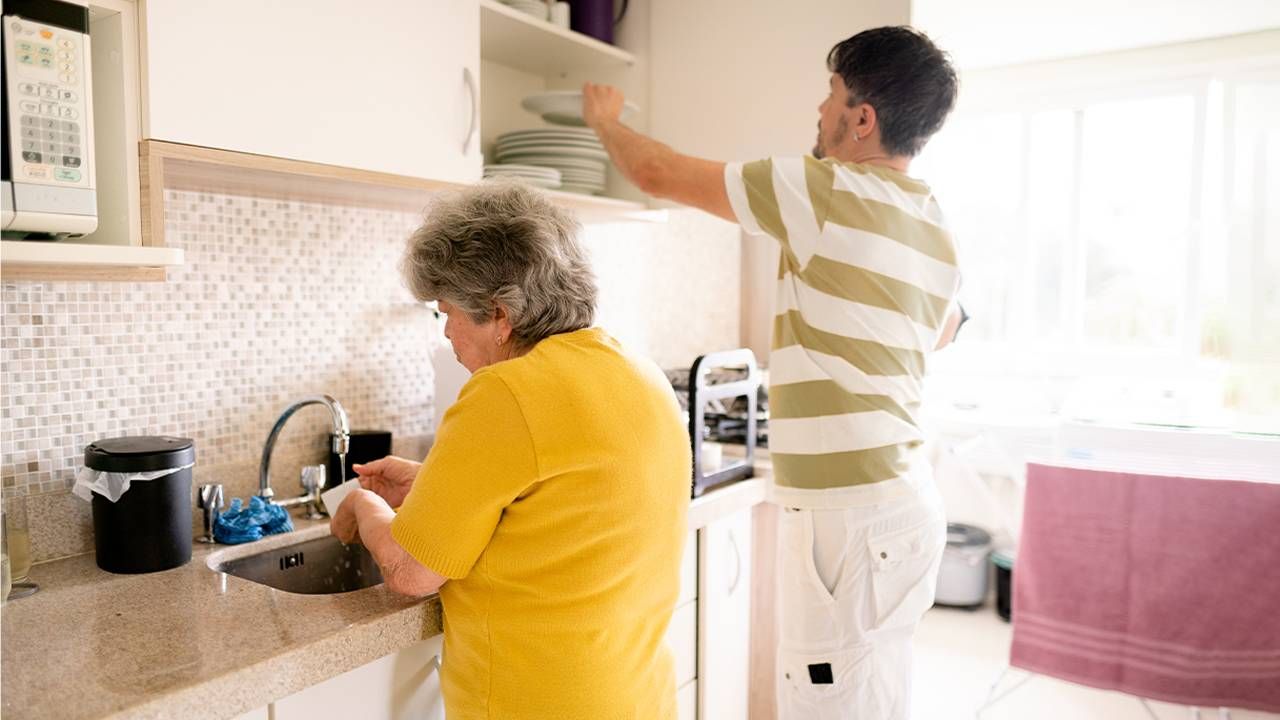
Dishwashing And Kitchen Movement
Instead of leaning forward or standing passively:
- Stand evenly on both feet
- Shift weight gently between legs
- Keep your posture upright
This supports:
- Balance
- Core stability
- Endurance while standing
Laundry And Carrying
Instead of bending quickly or rushing:
- Bend your knees slightly when picking items up
- Carry smaller loads with control
- Move slowly when placing items
This helps with:
- Lower body strength
- Safer lifting habits
- Coordination
Sweeping And Mopping
Instead of quick, repetitive motions:
- Use longer, controlled strokes
- Alternate sides regularly
- Stay balanced while moving
This activates:
- Upper body
- Core
- Coordination
Making The Bed
Instead of rushing through it:
- Reach evenly across both sides
- Step around the bed instead of stretching awkwardly
- Keep movements controlled
This improves:
- Flexibility
- Balance
- Full-body coordination
Light Indoor Plant Care Or Tidying
Simple tasks like watering plants or organizing small areas can:
- Encourage gentle bending
- Improve hand coordination
- Keep you moving consistently
Comparison: Rushed Chores vs Intentional Movement
| Approach | Rushed Chores | Intentional Movement |
|---|---|---|
| Speed | Fast, automatic | Controlled, steady |
| Body Awareness | Minimal | High awareness |
| Muscle Use | Limited | Full-body engagement |
| Balance Practice | None | Naturally improved |
| Long-Term Benefit | Low | Gradual strength & stability |
👉 The chore stays the same
👉 The benefit changes completely
Practical Ways To Build This Habit
Start small and keep it simple.
- Choose one daily chore
- Slow it down slightly
- Focus on posture and balance
- Add one improvement at a time
Over time, this becomes automatic—and that’s when the real benefit builds.
Recommended: Tools That Make Movement Easier (Not Harder)
Using the right tools can make a big difference in how your body feels during chores.
Look For:
- Lightweight equipment
- Easy-to-handle designs
- Comfortable grips
Soft Recommendations:
- Lightweight mops or sweepers
- Easy-carry laundry baskets
- Adjustable cleaning tools
These reduce unnecessary strain and allow smoother movement.
Recommended: Supportive Indoor Setup
Your home setup can either support movement—or make it harder.
Helpful Adjustments:
- Non-slip flooring or mats
- Proper lighting to improve visibility
- Easy-to-reach storage
Why It Matters:
- Reduces risk of slips
- Encourages more movement
- Makes daily tasks feel easier
Connecting This With Your Daily Routine
This approach works because it fits into what you’re already doing.
Instead of adding something new, you improve what’s already there.
If you’ve already started building better daily habits, this pairs naturally with daily-life-after-50 to create a simple system that supports both movement and independence.
Why This Works Long-Term
Because it removes resistance.
There’s:
- No strict schedule
- No pressure to perform
- No need for motivation
Instead:
- You stay consistent
- You move naturally
- You improve without forcing it
That’s what makes it sustainable.
❓ FAQ
Can daily chores really help me stay active after 50?
Yes. When done with awareness and consistency, they provide regular movement that supports strength, balance, and coordination.
How long should I spend doing these activities?
There’s no set time. Focus on doing your usual tasks more intentionally rather than increasing duration.
What if I have limited mobility?
Start with very small adjustments. Even slight improvements in posture and control can make a difference over time.
Do I need to do all these chores every day?
No. Choose the ones that naturally fit your routine and build from there.
Will this replace exercise completely?
It can significantly improve daily movement, but combining it with light structured activity when possible can provide additional benefits.
Final Thoughts
Staying active after 50 doesn’t have to come from structured routines or demanding workouts. In many cases, the most effective approach is the one that blends into your daily life without resistance.
Chores are already part of your routine. They don’t require extra planning or effort to begin—they simply require a shift in awareness. When you slow down, move with intention, and stay present with how your body works, those small daily actions begin to add up.
Over time, these movements support strength, balance, and coordination in a way that feels natural—not forced.
And that’s what makes them powerful.
What I’ve learned is this: staying active after 50 isn’t about doing more—it’s about doing everyday things a little differently. When you move with intention, even simple chores start working for you instead of just tiring you out.
Sam Ammouri
Affiliate Disclaimer
Some links in this article may be affiliate links, including links to Amazon and other partners. This means a small commission may be earned at no extra cost to you.