
You may notice a strange moment after the age of 50 that seems to appear out of nowhere.
You wake up in the morning, swing your legs over the edge of the bed, and take your first steps. Suddenly, your heel or the bottom of your foot feels tight, sore, or even sharply painful.
For a few seconds, you might limp slightly until the foot loosens up. After walking around for a few minutes, the discomfort often fades.
Then the next morning, it happens again.
If this experience sounds familiar, you are far from alone. Many people begin searching for answers when their feet hurt when they first stand up in the morning after 50, wondering whether it is simple stiffness or a sign of something more serious.
The great news is that this symptom is extremely common and, in many cases, it improves with a few simple habits that support foot health.
Why Do My Feet Hurt When I First Stand Up in the Morning After 50?
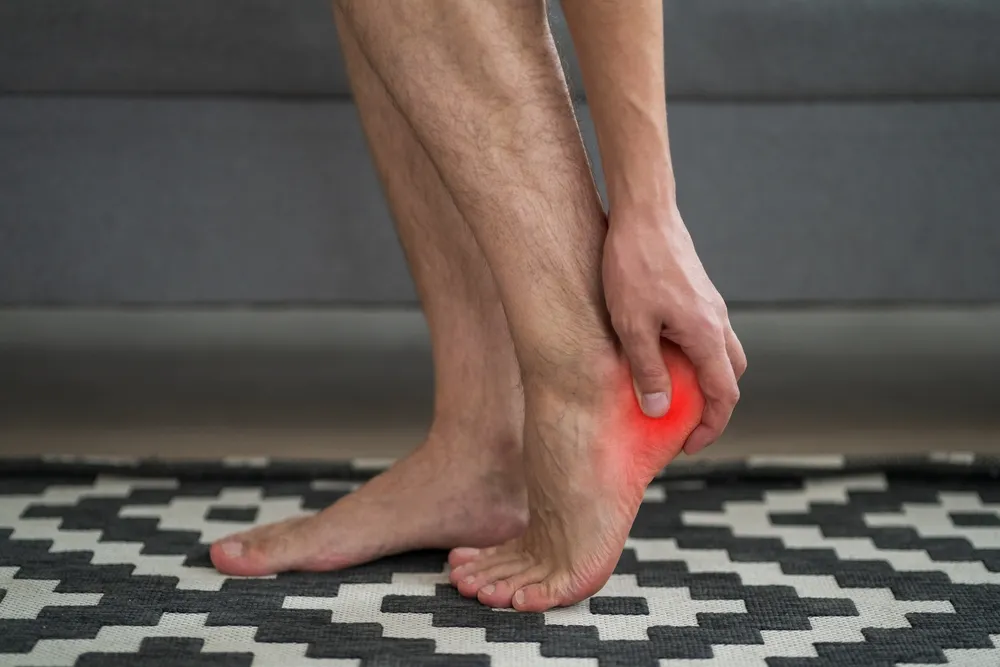
In most cases, this happens because the plantar fascia tightens overnight and suddenly stretches when you stand. The discomfort is usually temporary and improves after a few steps.
What Causes This Morning Foot Pain?
One of the most common reasons for this discomfort involves the plantar fascia.
The plantar fascia is a thick band of tissue that runs along the bottom of the foot, connecting the heel to the toes. It supports the arch and absorbs shock when walking.
During sleep, the foot remains still for several hours, allowing the plantar fascia to tighten slightly. When you stand up, the tissue stretches quickly, which can create a sharp or tight sensation.
This type of discomfort can sometimes appear alongside other foot-related symptoms, such as Why Do My Feet Burn at Night After 50?, especially when nerves or circulation are involved.
What Experts Say About Morning Foot Pain After 50
Mayo Clinic explains that plantar fasciitis is one of the most common causes of heel pain and is often most noticeable during the first steps after waking.
Why This Becomes More Common After 50
Our feet support us through decades of daily movement.
Over time, natural changes occur:
• Gradual tightening of connective tissues
• Thinning of the natural cushioning in the heel
• Reduced flexibility in the foot and calf muscles
These changes are normal, but they can make the feet more sensitive after periods of rest.
Other Possible Causes of Morning Foot Pain
Tight Calf Muscles
Tight calves increase tension on the plantar fascia.
Unsupportive Footwear
Shoes without proper arch support can strain the foot over time.
Long Periods of Standing
Standing for extended periods increases pressure on the heel and arch.
Gentle Habits That May Help Reduce Morning Foot Pain
Stretch the Foot Before Standing
Gently flex and point your toes before getting out of bed.
Massage the Bottom of the Foot
A short massage can help relax tight tissue.
Start the Morning Slowly
Allow the foot to warm up before putting full weight on it.
Support Tools That May Help Reduce Foot Strain
Some people find it helpful to use simple tools that support the arch and reduce tension on the plantar fascia.
• Arch support shoe inserts designed for better foot alignment
• Foot massage rollers that help stretch the plantar fascia
• Night splints designed to gently stretch the foot during sleep
Common Mistakes to Avoid After 50
Walking Barefoot on Hard Floors
Hard surfaces increase pressure on the heel.
Ignoring Early Symptoms
Early attention often prevents worsening discomfort.
Skipping Stretching
Stretching helps maintain flexibility and reduce tension.
Frequently Asked Questions
Is morning foot pain common after 50?
Yes, many people experience heel or arch discomfort after periods of rest.
Does plantar fasciitis always require treatment?
Many mild cases improve with simple habits like stretching and supportive footwear.
Can exercise help reduce foot pain?
Yes, gentle stretching and strengthening exercises support foot health.
You May Also Find Helpful
- Why Do My Feet Burn at Night After 50? Causes and Simple Ways to Find Relief
- Why Do My Joints Crack More After 50? Causes, Myths, and When to Pay Attention
- Best Low-Impact Home Workouts for 50+ With Bad Knees
Final Thoughts
Experiencing foot pain during the first steps of the morning can feel discouraging, especially when it appears unexpectedly.
In many cases, it reflects the natural response of tissues that have been resting overnight.
With gentle stretching, supportive habits, and consistency, many people notice gradual improvement.
There is no problem that has no solution and no illness that has no medicine.
— Sam Ammouri
About the Author
I am Sam Ammouri, the founder of PowerAt50Plus.com—a platform built from real-life experience, resilience, and a deep commitment to helping others feel better after 50.
After facing serious health challenges, I chose to take control through consistent habits, movement, and practical strategies. That journey became the foundation of this website.
Today, I share realistic, simple approaches to help improve comfort, mobility, and confidence—without overwhelming routines.
– Sam Ammouri
Medical Disclaimer
This article is based on a combination of general research, medical sources, and real-life experience. Many of the insights shared here come from personal health challenges, ongoing learning, and conversations with healthcare professionals over time.
While these approaches have helped in real situations, every individual is different. This content is not intended to replace professional medical advice, diagnosis, or treatment.
If you are experiencing persistent, worsening, or concerning symptoms, it is always best to consult a qualified healthcare provider who understands your specific condition.
Affiliate Disclaimer
This article may contain affiliate links. If a purchase is made, it may earn a small commission at no additional cost to you. This helps support the site.