
Exercise can feel different after 50, especially when knee discomfort starts limiting the activities you once enjoyed. Running, jumping, squatting, or even longer walks may leave your knees feeling sore, stiff, or irritated.
That does not mean you need to stop exercising. In many cases, low-impact movement can help maintain strength, flexibility, balance, and mobility while placing less stress on sensitive joints.
The best low-impact home workouts focus on keeping the body active without excessive impact on the knees. The exercises below can help support fitness and overall mobility while allowing you to exercise more comfortably at home.
Can You Exercise Safely With Bad Knees After 50?
This is one of the most common concerns people have.
When the knees begin to feel sensitive, many assume the safest option is to stop exercising altogether. But in many cases, the opposite is true.
Gentle, low-impact exercise can help keep joints flexible and strengthen the muscles that support the knee.
Gentle movement helps maintain circulation and keeps the joints flexible as we age.
According to the Mayo Clinic, regular low-impact exercise can help maintain joint mobility and reduce stiffness that often appears with aging.
The key is choosing exercises that protect the knees while strengthening the body.
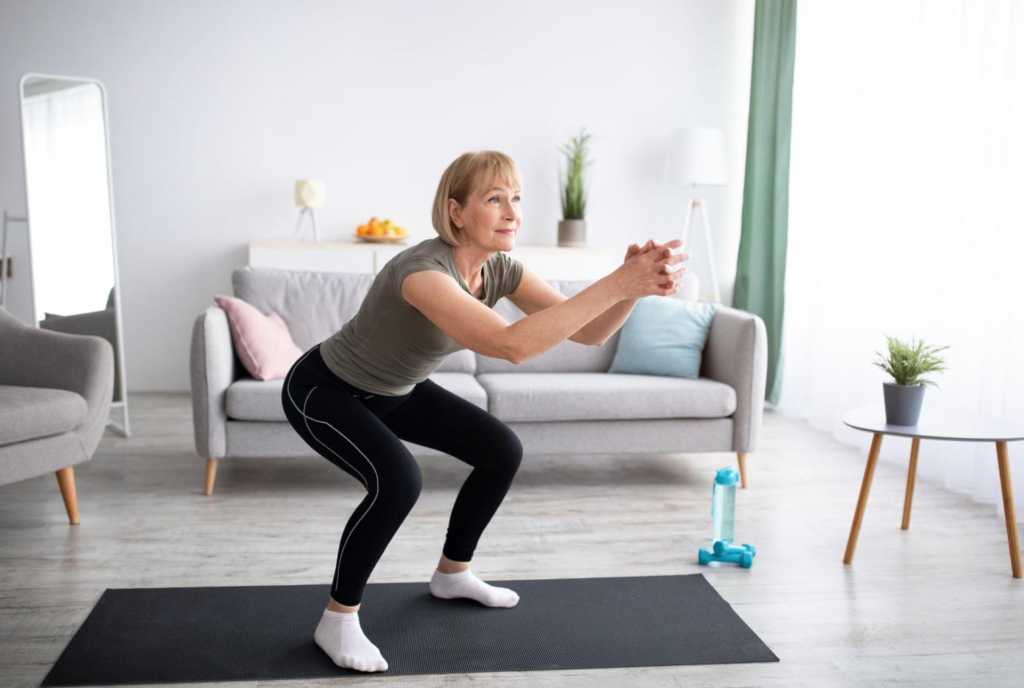
Why Low-Impact Exercise Becomes More Important After 50
This is why many health experts recommend choosing exercises for bad knees over 50 that strengthen surrounding muscles while reducing impact on the joints.
Our knees support the body through decades of movement.
Walking, climbing stairs, bending, and standing all rely on these joints working smoothly.
Over time, small changes occur:
• cartilage naturally becomes thinner
• joints may feel stiffer after rest
• muscles around the knee may weaken
These changes are normal, but they mean that high-impact workouts may no longer be the best option.
Low-impact workouts allow you to stay active while reducing stress on the knee joint.
Gentle Warm-Up Before Exercises for Bad Knees Over 50
Before beginning any workout, warming up helps prepare the joints.
A simple warm-up can include:
• walking slowly in place
• gentle knee bends
• light stretching
Even two or three minutes of gentle movement can help lubricate the joints and improve comfort during exercise.
1. Chair Squats
Chair squats are one of the safest ways to strengthen the legs.
They mimic the natural motion of sitting and standing, which helps build strength in the thighs and hips.
How to perform
-
Stand in front of a sturdy chair
-
Slowly lower yourself toward the seat
-
Lightly touch the chair and stand back up
Start with 8–10 repetitions.
2. Seated Leg Extensions
This exercise strengthens the quadriceps, an important muscle group that supports the knee joint.
How to perform
-
Sit comfortably in a chair
-
Slowly extend one leg forward
-
Hold for a few seconds before lowering
Repeat 10 times on each leg.
3. Wall Push-Ups
Upper-body strength also helps maintain balance and posture.
Wall push-ups allow you to strengthen the arms and chest without placing stress on the knees.
How to perform
-
Stand facing a wall
-
Place your hands on the wall at shoulder height
-
Slowly lean forward and push back
4. Glute Bridges
Strong hip muscles reduce strain on the knees.
Glute bridges strengthen the hips and lower back.
How to perform
-
Lie on your back with knees bent
-
Lift the hips slowly toward the ceiling
-
Hold briefly and lower
This movement improves stability and supports joint health.
Helpful Tools That Some People Find Useful
Some people also find that a few simple tools make low-impact workouts safer and more comfortable at home.
– Resistance bands designed for gentle strength training
– Knee support braces designed to stabilize the knee joint during exercise
– Non-slip exercise mats designed for safe home workouts
These tools can help improve stability and support safe movement during home exercise routines.
Best natural vitamins
- 6-in-1 Anabolic Muscle Builder for Men
- NuBest Grow Power – Bone Strength Calcium
- Magnesium 7 Complex Supplement
Best foods
Lean beef
Tuna
White meat chicken
Salmon
Beans
Common Mistakes to Avoid
When exercising with knee discomfort, a few habits can unintentionally make things worse.
Choosing High-Impact Exercises
Running, jumping, or intense workouts may place too much stress on sensitive knees.
Low-impact alternatives are often safer.
Skipping Strength Training
Many people focus only on stretching.
But strengthening the muscles around the knee provides important support for the joint.
Ignoring Pain Signals
Exercise should feel challenging but not painful.
Sharp or persistent pain is the body’s way of asking for adjustment.
Frequently Asked Questions
What exercise is best for bad knees after 50?
Low-impact exercises such as chair squats, gentle strength training, and walking are often helpful.
Should people with knee discomfort stop exercising?
Complete inactivity can increase stiffness. Gentle movement usually supports joint health.
How often should low-impact workouts be done?
Many people benefit from three to four sessions per week.
You May Also Find Helpful
Staying active after 50 is closely connected to joint health, muscle strength, and overall mobility. You may also find these articles helpful.
- The Best Strength Training Exercises for People Over 50
- Low-Impact Workouts That Still Build Strength Over 50
- 7 Strength Exercises Everyone Over 50 Should Do
Final Thoughts
Knee discomfort can make exercise feel intimidating at first. But staying active remains one of the most powerful ways to support joint health after 50.
By choosing low-impact exercises and moving at a comfortable pace, many people discover that their knees actually become stronger and more stable over time.
Small, consistent steps often lead to the greatest improvements in strength, mobility, and confidence.
There is no problem that has no solution and no illness that has no medicine.
— Sam Ammouri
About the Author
I am Sam Ammouri, the founder of PowerAt50Plus.com—a platform built from real-life experience, resilience, and a deep commitment to helping others feel better after 50.
The Turning Point
After facing several serious health challenges, I reached a moment where I had a choice—accept decline, or fight back. I chose to fight, with determination, consistency, and an unshakable will to regain control of my health and my life.
The Comeback
By combining medical guidance with natural remedies, simple daily movement, and sustainable lifestyle changes, I experienced a powerful comeback—proving that improvement is possible at any stage of life.
Why This Website Exists
That journey became the foundation of this website. Today, I share practical, realistic strategies to help you reduce discomfort, move more freely, and rebuild confidence—without overwhelming routines or unrealistic expectations.
A Message to You
My belief is simple: if meaningful change was possible for me, it’s possible for you too. You don’t need perfection or extreme measures—you just need the will to keep going.
And once you do—very little can stand in your way.