
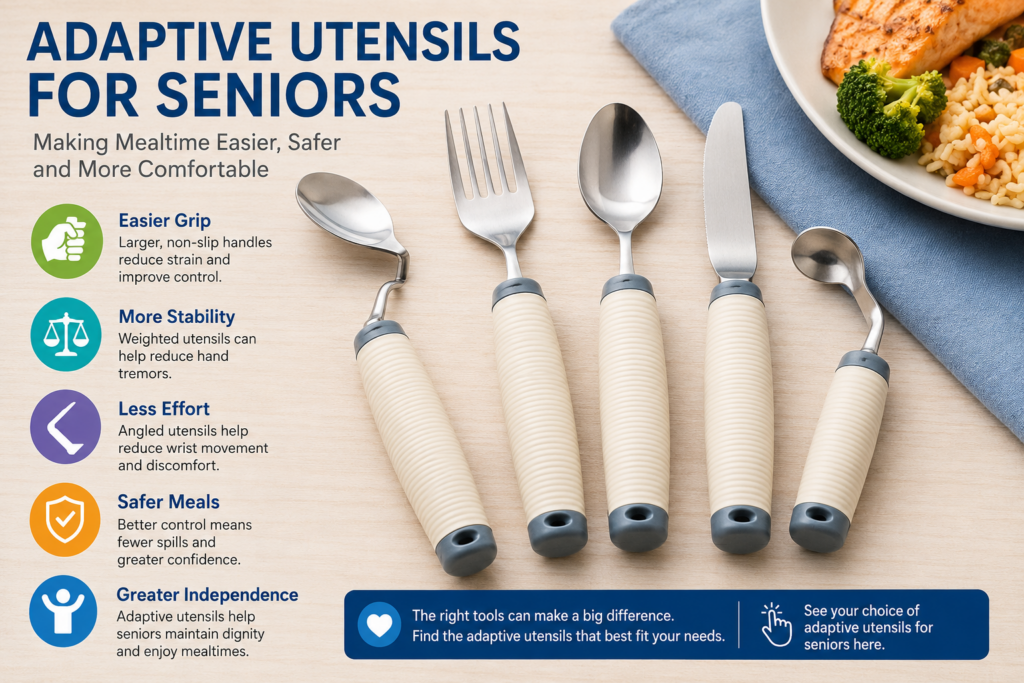
Adaptive utensils for seniors can make everyday meals easier when arthritis, hand tremors, or reduced hand strength make standard silverware difficult to use. Something as simple as holding a fork, lifting a spoon, or cutting food can become frustrating when hand pain, stiffness, or shaking affects control.
Many older adults find themselves avoiding certain foods or needing assistance during meals because regular utensils no longer feel comfortable. The good news is that adaptive utensils are specifically designed to improve grip, reduce strain, and help maintain independence at the table.
Choosing the right adaptive utensil often depends on the specific challenge being faced. Some seniors need larger handles for arthritis, while others benefit from weighted utensils that may help reduce the effects of hand tremors.
Why Eating Can Become More Difficult With Age
Aging itself does not automatically cause difficulty eating, but several common conditions can affect hand function.
These include:
- Arthritis
- Essential tremor
- Parkinson’s disease
- Reduced grip strength
- Stroke recovery
- Hand weakness from aging
Pain, stiffness, and reduced dexterity can turn a simple meal into a daily challenge.
Many seniors compensate by gripping utensils harder, which often leads to greater discomfort and fatigue.
What Are Adaptive Utensils?
Adaptive utensils are specially designed forks, spoons, and knives that help individuals with limited hand function eat more comfortably.
Common features include:
- Larger handles
- Non-slip grips
- Weighted designs
- Angled heads
- Bendable utensils
- Lightweight construction
The goal is simple: make eating safer, easier, and more comfortable.
Types of Adaptive Utensils for Seniors
Different designs address different problems.
1. Built-Up Handle Utensils
Built-up handle utensils feature thicker handles that are easier to grasp.
Many seniors with arthritis struggle to hold narrow utensils because finger joints become painful when gripping tightly.
Benefits include:
- Less strain on joints
- Improved comfort
- Better control
- Reduced hand fatigue
Best For: Arthritis, weak grip strength, hand pain
⇒ See your choice of adaptive utensils with built-up handles here At Amazon
2. Weighted Utensils
Weighted utensils contain additional weight in the handle to help stabilize movement.
These utensils are commonly used by people who experience hand tremors.
The extra weight may help reduce shaking during eating and improve control when moving food from the plate to the mouth.
Benefits include:
- Improved stability
- Greater confidence during meals
- Reduced spills
- Better control
Best For: Hand tremors, Parkinson’s disease, essential tremor
⇒ See your choice of weighted utensils for hand tremors here
3. Angled Utensils
Angled utensils feature spoon or fork heads positioned at an angle.
This design reduces the amount of wrist movement needed during meals.
Benefits include:
- Less wrist strain
- Easier self-feeding
- Improved comfort
Best For: Limited wrist mobility and reduced range of motion
⇒ See your choice of angled adaptive utensils here
4. Bendable Utensils
Bendable utensils can be adjusted to different angles depending on the user’s needs.
They provide flexibility for people with mobility limitations.
Benefits include:
- Custom positioning
- Easier eating from different angles
- Improved comfort
Best For: Severe mobility limitations and rehabilitation needs
⇒ See your choice of bendable adaptive utensils here
5. Combination Adaptive Sets
Many manufacturers offer complete adaptive eating sets that combine several features.
These may include:
- Built-up handles
- Weighted designs
- Angled utensils
- Adaptive knives
Benefits include:
- Comprehensive support
- Better value
- Multiple options to try
Best For: Seniors who are unsure which style will work best
⇒ See your choice of adaptive utensil sets for seniors here
Comparison Table
| Type of Utensil | Best For | Main Benefit |
|---|---|---|
| Built-Up Handle | Arthritis | Easier grip |
| Weighted Utensils | Hand Tremors | Improved stability |
| Angled Utensils | Limited Mobility | Reduced wrist movement |
| Bendable Utensils | Severe Limitations | Custom positioning |
| Adaptive Sets | Multiple Needs | Variety of options |
Features to Look for Before Buying
Not all adaptive utensils are created equal.
Consider these features before choosing a set.
Handle Size
Larger handles often require less gripping force.
This can be especially helpful for arthritis sufferers.
Grip Material
Rubberized and textured surfaces help prevent slipping.
Weight
Some users prefer lightweight utensils, while others benefit from heavier weighted models.
Ease of Cleaning
Dishwasher-safe utensils reduce maintenance and simplify daily use.
Durability
Look for sturdy materials designed to withstand frequent use.
Other Helpful Eating Aids
Adaptive utensils are only one part of creating a more comfortable dining experience.
Additional tools that may help include:
- Non-slip placemats
- Scoop plates
- Plate guards
- Cups with large handles
- Adaptive cutting boards
Small adjustments can make a noticeable difference in daily independence.
You may also find it helpful to read our guide on home modifications that support independent living after 50.
Another useful resource is our article explaining why your home feels more tiring to move around after 50.
Benefits Beyond Convenience
The benefits of adaptive utensils go beyond making meals easier.
Many seniors report improvements in:
- Confidence
- Independence
- Comfort
- Dignity
- Quality of life
Being able to eat independently can have a significant impact on emotional well-being.
For caregivers, adaptive utensils may also reduce the amount of assistance required during meals.
Frequently Asked Questions
What are adaptive utensils for seniors?
Adaptive utensils are specially designed eating tools that help seniors with arthritis, tremors, weak grip strength, or limited hand mobility eat more comfortably.
Do weighted utensils help with hand tremors?
Many people find weighted utensils helpful because the added weight may improve stability and reduce shaking during meals.
Are adaptive utensils dishwasher safe?
Many modern adaptive utensils are dishwasher safe, but it is always important to check the manufacturer’s instructions.
Can arthritis make eating difficult?
Yes. Arthritis can cause pain, stiffness, and reduced grip strength, making it harder to hold and control standard utensils.
What type of adaptive utensil is best for arthritis?
Built-up handle utensils are often preferred because they reduce the amount of grip strength needed during meals.
Final Thoughts
Adaptive utensils for seniors can make a meaningful difference for people dealing with arthritis, hand tremors, or reduced hand strength. The right utensils can improve comfort, increase independence, and help make mealtimes less stressful.
Whether the challenge is joint pain, shaky hands, or limited mobility, there are adaptive solutions designed to address those specific needs. Taking the time to find the right utensil can help turn meals back into an enjoyable part of the day.
Affiliate Disclosure:
Some links in this article may be affiliate links. As an Amazon Associate, PowerAt50Plus earns from qualifying purchases at no extra cost to you.
Sam Ammouri
Founder, PowerAt50Plus.com