
Choosing the right kitchen knives for arthritic hands can make everyday food preparation more comfortable and less tiring. Hand pain, stiffness, and reduced grip strength often turn simple cutting tasks into frustrating challenges, especially when using traditional kitchen knives that require significant pressure and control.
In many cases, the problem is not cooking itself. The problem is using kitchen tools that were never designed for painful joints, weak hands, or limited mobility.
A kitchen knife that feels comfortable and easy to control can reduce strain on the hands while making food preparation safer and more enjoyable. Understanding which features matter most can help you choose a knife that works with your hands rather than against them.
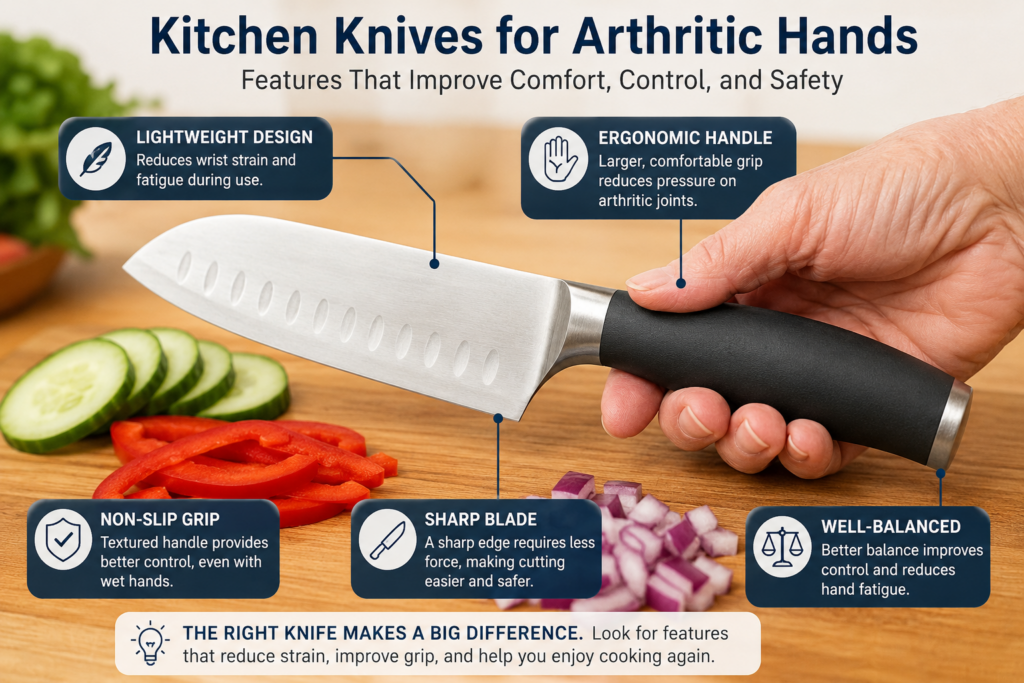
Why Kitchen Knives for Arthritic Hands Need Different Features
Most traditional kitchen knives are designed for users with strong grip strength and good wrist mobility.
That can create several problems when arthritis or hand weakness develops:
- Thin handles require more squeezing force.
- Heavy knives place additional strain on the wrist.
- Slippery handles reduce control.
- Dull blades require greater cutting pressure.
- Poor balance can make the knife feel awkward and tiring.
A knife that once felt perfectly normal may become uncomfortable after only a few minutes of use.
Fortunately, certain features can make a significant difference.
If gripping kitchen tools has become more difficult, you may also find our guide on arthritis-friendly kitchen tools helpful.
Ergonomic Handles in Kitchen Knives for Arthritic Hands
Handle design is often the most important feature to consider.
A larger ergonomic handle spreads pressure across a wider area of the hand. Instead of forcing the fingers to grip tightly, the handle allows a more relaxed and comfortable hold.
Look for handles that offer:
- A larger diameter
- Soft-grip materials
- Contoured shapes
- Non-slip surfaces
These features can reduce stress on finger joints while improving overall control.
Why Lightweight Kitchen Knives Are Easier on Arthritic Hands
Many people assume a heavier knife cuts better.
While that may be true in some professional kitchens, a lighter knife is often easier to manage when grip strength is limited.
Benefits of lightweight knives include:
- Reduced wrist fatigue
- Better maneuverability
- Easier control
- Less strain during repetitive tasks
A knife should feel stable without feeling burdensome.
Non-Slip Handles Improve Safety
Kitchen safety becomes increasingly important when grip strength decreases.
Handles with textured or rubberized surfaces help prevent slipping, especially when hands are wet or when preparing foods that contain oils or moisture.
Better grip means:
- Better control
- Less hand fatigue
- Increased confidence during food preparation
- Lower risk of accidents
A secure handle often makes a greater difference than blade style.
Sharp Blades Reduce Cutting Force
One of the biggest mistakes people make is continuing to use dull knives.
A dull blade requires additional pressure to cut through food. That extra force places more stress on painful joints and weak hands.
A sharp blade cuts more efficiently and often feels easier to control.
Whether choosing a new knife or maintaining an existing one, blade sharpness should always be a priority.
Products That Can Relieve Hand Strain During Food Preparation
Once grip strength begins to decline, the right kitchen tools can make food preparation more comfortable and less tiring.
Easy-Grip Kitchen Knives
Easy-grip kitchen knives reduce the squeezing force needed during food preparation while improving comfort and control for painful or stiff hands.
⇒ See your choice of easy-grip kitchen knives here at Amazon.
Adaptive and Rocker Knives
Adaptive knives and rocker knives require less gripping force and less wrist movement than many traditional kitchen knives. They are widely used by people dealing with arthritis and limited hand mobility.
⇒ See your choice of adaptive kitchen knives here.
Cut-Resistant Kitchen Gloves
Cut-resistant gloves provide additional protection and confidence during food preparation, especially when grip strength has become less reliable.
⇒ See your choice of cut-resistant kitchen gloves here.
Kitchen Knife Features at a Glance
| Feature | Why It Matters | Best For |
|---|---|---|
| Ergonomic Handle | Reduces pressure on fingers and joints | Arthritis and hand pain |
| Lightweight Design | Reduces wrist fatigue | Reduced grip strength |
| Non-Slip Grip | Improves control and safety | Weak hands |
| Sharp Blade | Requires less cutting force | Everyday food preparation |
| Rocker Knife Design | Reduces wrist movement | Severe arthritis |
| Balanced Weight | Improves comfort and control | Extended kitchen use |
Rocker Knives vs Traditional Kitchen Knives
Traditional kitchen knives rely heavily on wrist movement and grip strength.
Rocker knives use a curved blade that cuts with a rocking motion. This design reduces the amount of force required while minimizing wrist movement.
Rocker knives may be worth considering if:
- Arthritis affects the wrist
- Hand strength has significantly decreased
- Traditional slicing motions cause discomfort
- Extended food preparation becomes tiring
They are not necessary for everyone, but they can be a useful option when standard knives become difficult to manage.
Common Mistakes When Buying Kitchen Knives for Arthritic Hands
Choosing the Heaviest Knife
A heavy knife often creates more fatigue rather than better performance.
Focusing Only on the Blade
The handle is usually more important than the blade when comfort is the primary goal.
Ignoring Balance
A well-balanced knife feels easier to control and places less strain on the wrist.
Overlooking Grip Material
Smooth handles may look attractive but often provide less control than textured or rubberized grips.
Continuing to Use Dull Knives
Even the best ergonomic knife becomes harder to use if the blade is not maintained properly.
Frequently Asked Questions
What type of kitchen knife is easiest to use with arthritis?
Knives with ergonomic handles, lightweight construction, and non-slip grips are generally the easiest to use when arthritis affects the hands. These features reduce the amount of squeezing force needed during food preparation.
Are lightweight kitchen knives better for weak hands?
In many cases, yes. Lightweight knives reduce wrist fatigue and are often easier to control during repetitive cutting tasks.
What is a rocker knife?
A rocker knife uses a curved blade that cuts with a rocking motion instead of a traditional slicing motion. This design reduces wrist movement and can be easier to use when hand mobility is limited.
Do ergonomic handles reduce hand pain?
An ergonomic handle cannot treat arthritis, but it can reduce pressure on painful joints and improve comfort during food preparation.
Are electric knives easier to use?
Electric knives can be useful for certain cutting tasks because they reduce the amount of force required. However, they may not replace a comfortable everyday kitchen knife for general food preparation.
Choosing the right kitchen knives for arthritic hands can make everyday cooking more comfortable and less tiring.
Final Thoughts
The best kitchen knife for arthritic hands is not necessarily the most expensive knife on the market. Features such as ergonomic handles, lightweight construction, non-slip grips, proper balance, and sharp blades often have a much greater impact on comfort and control.
Small changes in kitchen tools can make everyday meal preparation easier, safer, and less tiring. Choosing a knife that works with your hands rather than against them can help maintain confidence and independence in the kitchen for years to come.
Affiliate Disclosure:
Some links in this article may be affiliate links. As an Amazon Associate, PowerAt50Plus earns from qualifying purchases at no extra cost to you.