
Night leg cramps after 50 are very common. Many people reach this stage and begin noticing painful calf cramps that suddenly wake them from sleep. You go to bed feeling comfortable, drift into rest, and without warning, your calf tightens intensely.
The muscle can contract so strongly that it pulls you out of deep sleep and leaves lingering soreness the next morning.
If this sounds familiar, you are far from alone. Nighttime leg cramps after 50 are often linked to simple factors that can be improved with small daily adjustments.
Understanding why these cramps happen can help you take practical steps toward more restful nights and more comfortable movement during the day.
Why Do Leg Cramps Become More Common After 50?
Leg cramps after 50 are often caused by muscle fatigue, dehydration, circulation changes, and shifts in nerve signaling that make muscles more sensitive to sudden contraction.
As the body changes over time, muscles may lose some flexibility and endurance. When muscles become slightly fatigued or dehydrated, they are more likely to tighten suddenly during rest.
Other contributing factors include:
• Muscle fatigue from daily activity
• Reduced circulation during rest
• Changes in nerve signaling
• Long periods of sitting
• Mild dehydration
Some individuals also experience related nighttime symptoms, such as Why Do My Feet Burn at Night After 50?, which may also be linked to circulation and nerve changes.
What Experts Say About Night Leg Cramps
Cleveland Clinic explains that leg cramps during sleep commonly occur when muscles become fatigued, dehydrated, or remain inactive for long periods, making nighttime a common trigger.
Can Magnesium Help Prevent Night Leg Cramps?
Magnesium plays an important role in muscle relaxation. While calcium helps muscles contract, magnesium helps them release.
When magnesium levels are too low, muscles may contract more easily and remain tight longer.
Adults over 50 may experience lower magnesium levels due to:
• Reduced absorption in digestion
• Medications that affect mineral balance
• Diets low in magnesium-rich foods
• Ongoing stress that depletes minerals
Foods rich in magnesium include leafy greens, almonds, pumpkin seeds, avocados, and beans.
Some people also find it helpful to support their mineral balance as part of their routine.
Some people find it helpful to use simple options that support muscle relaxation and hydration.
• Magnesium glycinate supplements are designed to support muscle relaxation
• Electrolyte drink powders that help maintain hydration balance
• Epsom salt bath products are commonly used for muscle relaxation
Dehydration Can Trigger Muscle Cramps
Muscles rely on proper fluid and electrolyte balance.
When the body becomes even slightly dehydrated, mineral levels such as magnesium, potassium, and sodium can shift.
This imbalance makes muscles more likely to contract unexpectedly.
Maintaining steady hydration throughout the day can help reduce the likelihood of nighttime cramps.
See your choice of helpful anti-dehydration products here at Amazon
Sitting Too Long Can Tighten Leg Muscles
Long periods of sitting can cause muscles to shorten and tighten.
Tight muscles are more likely to cramp when stretched suddenly during sleep.
Even light movement during the day can make a noticeable difference.
Simple habits include:
• Taking short walking breaks
• Standing up regularly
• Light stretching throughout the day
Simple Evening Habits That May Prevent Night Cramps
Small changes before bed can help relax muscles.
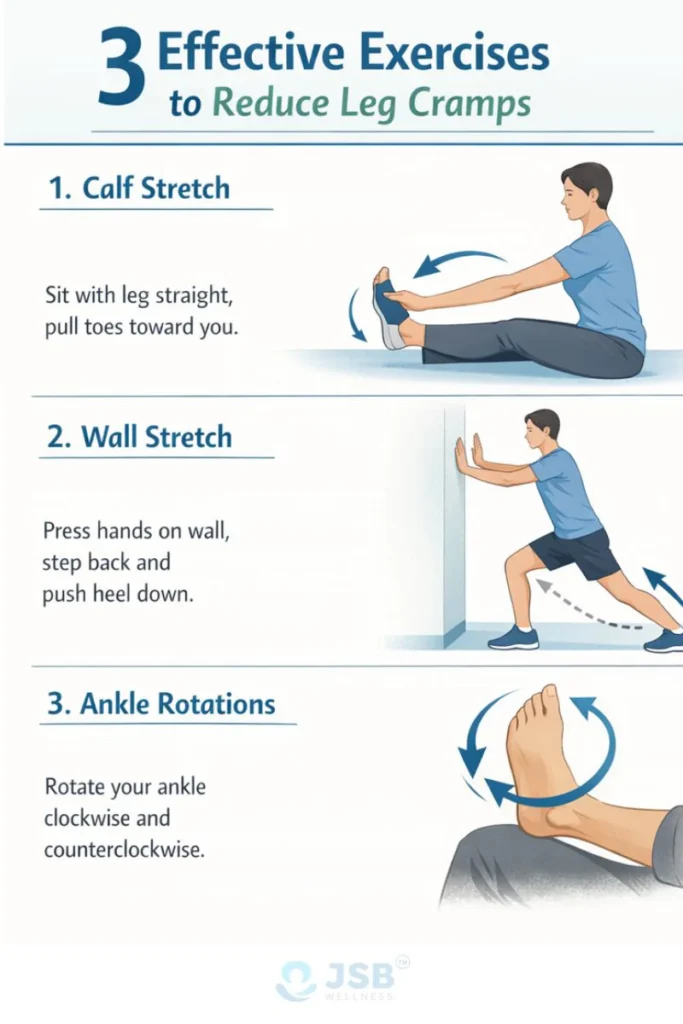
Gentle Stretching Before Bed
Stretching the calves and hamstrings helps reduce muscle tension.
Warm Showers or Baths
Warm water improves circulation and relaxes muscles.
Light Evening Walks
Short walks help maintain circulation without overexertion.
Proper Sleep Position
Sleeping with slightly bent knees or using a pillow under the legs can reduce muscle strain.
Some people also find that small comfort tools support muscle relaxation before sleep.
• Leg elevation pillows designed to reduce tension
• Heating pads that help relax calf muscles
• Foam rollers used for gentle muscle release
Check more comfort products that support muscle relaxation before sleep here
Quick Relief When a Cramp Happens
Even with prevention, cramps may still occur.
Stretch the Muscle
Straighten the leg and flex the foot upward.
Massage the Muscle
Gentle rubbing improves blood flow.
Apply Warmth
Heat helps relax the muscle quickly.
Common Mistakes to Avoid After 50
Ignoring Hydration
Even mild dehydration increases cramp risk.
Skipping Stretching
Tight muscles are more prone to cramping.
Sitting for Too Long
Inactive muscles tighten over time.
Overexercising Without Recovery
Fatigue increases cramp likelihood.
Ignoring Mineral Balance
Low magnesium or potassium can trigger cramps.
When Night Leg Cramps May Need Attention
Most cramps are harmless.
However, medical advice may be helpful if:
• Cramps occur every night
• Pain becomes severe
• Swelling or redness appears
• Weakness or numbness develops
Frequently Asked Questions
Why do leg cramps happen more often at night?
Because muscles relax during sleep and circulation slows slightly, making tight muscles more likely to contract.
Can magnesium help leg cramps?
Yes, magnesium supports muscle relaxation and may reduce cramping when levels are low.
Does walking help prevent cramps?
Yes, gentle movement improves circulation and flexibility.
Are leg cramps dangerous?
Most are harmless, but persistent symptoms should be evaluated.
You May Also Find Helpful
• Why Do I Wake Up at 3 AM After 50? Understanding Nighttime Wake-Ups and How to Sleep Better Again
• Magnesium Deficiency After 50 — and How It Affects Sleep, Stress, and Joint Pain
• Why Am I Always Tired After 50? Causes and Natural Ways to Restore Energy
Final Thoughts
Nighttime leg cramps can feel frustrating, especially when they interrupt sleep. But in many cases, they reflect simple signals from the body.
Often, the solution involves small adjustments—better hydration, improved mineral balance, and gentle daily movement.
With consistent habits, many people notice fewer cramps and more restful sleep.
There is no problem that has no solution and no illness that has no medicine.
— Sam Ammouri
About the Author
I am Sam Ammouri, the founder of PowerAt50Plus.com—a platform built from real-life experience, resilience, and a deep commitment to helping others feel better after 50.
After facing serious health challenges, I chose to take control through consistent habits, movement, and practical strategies. That journey became the foundation of this website.
Today, I share realistic, simple approaches to help improve comfort, mobility, and confidence—without overwhelming routines.
– Sam Ammouri
Medical Disclaimer
This article is based on a combination of general research, medical sources, and real-life experience. Many of the insights shared here come from personal health challenges, ongoing learning, and conversations with healthcare professionals over time.
While these approaches have helped in real situations, every individual is different. This content is not intended to replace professional medical advice, diagnosis, or treatment.
If you are experiencing persistent, worsening, or concerning symptoms, it is always best to consult a qualified healthcare provider who understands your specific condition.
Affiliate Disclaimer
This article may contain affiliate links. If a purchase is made, it may earn a small commission at no additional cost to you. This helps support the site.