
You wake up with a dry mouth, a scratchy throat, or a stuffy nose and wonder why your sleep hasn’t felt as comfortable lately. Maybe your snoring seems worse during the winter months, or you find yourself feeling less refreshed in the morning even after a full night’s sleep.
At first, these changes may not seem connected. But the air inside your bedroom can play a bigger role in sleep quality than many people realize. During colder months, heating systems and closed windows often make indoor air much drier, which can affect breathing comfort throughout the night.
After 50, the nose, throat, and airways may become more sensitive to dryness and irritation. As a result, even small changes in humidity can sometimes make symptoms such as dry mouth, congestion, throat irritation, and snoring more noticeable.
This is one reason humidifiers have become popular among many adults. While they are not a cure for snoring, adding moisture to dry indoor air may help create a more comfortable sleep environment and reduce some of the dryness that can interfere with restful sleep.
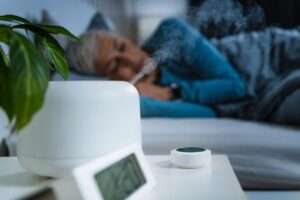
Why Dry Air Can Affect Snoring
Dry air may irritate the nose and throat during sleep. When airways become dry, tissues can feel more sensitive or swollen. Breathing through the mouth also becomes more common in dry environments, especially during winter months or when indoor heating runs constantly.
Snoring often becomes worse when airflow is restricted or when the throat tissues vibrate more heavily during sleep. Dryness alone may not directly cause snoring, but it can contribute to conditions that make snoring more noticeable.
Many adults over 50 experience situations like:
- Waking Up With A Dry Mouth
- Morning Throat Irritation
- Increased Congestion At Night
- Dry Nasal Passages
- Mouth Breathing During Sleep
- Louder Snoring In Winter
In many cases, the problem is not only sleep position or aging. The bedroom environment itself may also play a role.
What’s Really Happening Inside The Bedroom
Modern homes are often sealed tightly to improve heating and cooling efficiency. While this helps energy costs, it can also reduce indoor humidity levels significantly. During colder months, heaters pull moisture out of the air even faster.
Over time, dry indoor air may affect comfort in several ways:
| Dry Air Effects | Possible Sleep Impact |
|---|---|
| Dry Nose | More Mouth Breathing |
| Throat Irritation | Louder Snoring |
| Sinus Dryness | Congestion During Sleep |
| Dry Mouth | Morning Discomfort |
| Airway Irritation | Interrupted Sleep |
Many people only notice the symptoms gradually. The room may not feel uncomfortable during the day, yet nighttime dryness becomes more obvious while sleeping for several hours in the same environment.
Because of this, some adults begin using humidifiers mainly for comfort rather than as a medical solution.
How Humidifiers May Help
Humidifiers add moisture back into dry indoor air. This may help create a more balanced sleep environment, especially during winter or in homes with heavy heating use.
Some people notice improvements such as:
- Less Dryness In The Nose And Throat
- Reduced Mouth Breathing
- More Comfortable Breathing During Sleep
- Better Morning Throat Comfort
- Less Irritation From Dry Indoor Air
At the same time, humidifiers may help people who sleep with fans, air conditioning, or heating systems that dry the air overnight.
A humidifier does not “stop snoring” completely in most situations. However, if dryness is contributing to nighttime irritation or mouth breathing, adding moisture may help reduce some of those triggers.
What People Often Overlook
Many adults focus only on mattresses, pillows, or sleep positions while overlooking the actual air quality inside the bedroom. Yet dry air may quietly affect comfort every single night.
Small habits can also make dryness worse:
- Sleeping With A Fan Pointed Directly At The Face
- Running Heat All Night
- Not Drinking Enough Water During The Day
- Keeping Windows Closed For Long Periods
- Using Older Heating Systems
Even low humidity from seasonal weather can create discomfort over time.
In some cases, people think their snoring has suddenly become worse because of age alone. Instead, environmental dryness may be adding to the problem.
This is also why some people notice improvement when traveling to more humid climates or during certain seasons of the year.
Cool Mist Vs Warm Mist Humidifiers
Both types are commonly used for dry indoor air. The best choice often depends on personal comfort and room conditions.
| Type | Common Benefits | Things To Consider |
|---|---|---|
| Cool Mist Humidifier | Popular For Bedrooms, Energy Efficient | Needs Regular Cleaning |
| Warm Mist Humidifier | Warm Comfort Feeling During Winter | Uses More Energy |
| Ultrasonic Humidifier | Quiet Operation | Mineral Build-Up Possible |
| Evaporative Humidifier | Natural Moisture Control | Filter Replacement Needed |
Many adults prefer quieter humidifiers because noise itself can interfere with sleep quality.
Keeping humidity levels balanced is also important. Too much moisture can create other indoor air issues.
See your options here at Amazon
Best Bedroom Habits Alongside A Humidifier
Humidifiers often work best when combined with simple sleep comfort habits.
Helpful habits may include:
- Drinking Enough Water During The Day
- Keeping Bedrooms Slightly Cool
- Cleaning Humidifiers Regularly
- Sleeping On One Side Instead Of Flat On The Back
- Reducing Heavy Evening Alcohol Intake
- Managing Dust Inside The Bedroom
For some people, improving the overall bedroom setup makes a noticeable difference over time.
This is also where comfortable sleep environments become important after 50. Small changes inside the bedroom can affect energy, sleep quality, and nighttime comfort more than many people expect. Articles like How Acid Reflux Interrupts Deep Sleep After 50 may also help explain why several small nighttime habits sometimes work together to affect sleep quality.
According to the American Academy of Sleep Medicine, snoring may become more common with age because airway muscles naturally relax during sleep. Environmental factors like nasal congestion, dry air, and mouth breathing may also contribute to nighttime breathing discomfort.
This is one reason many sleep specialists recommend looking at overall sleep environment habits rather than focusing on only one single cause.
Where Can You Find Humidifiers?
Humidifiers are widely available in:
- Local Supermarkets
- Home Improvement Stores
- Warehouse Clubs
- Health And Wellness Stores
- Large Retail Chains
For more convenience, you can check available options on Amazon.
Some adults prefer smaller bedside humidifiers, while others use larger room models depending on bedroom size and climate conditions.
Signs Your Bedroom Air May Be Too Dry
Some signs are easy to overlook because they develop gradually.
Common signs may include:
- Dry Lips In The Morning
- Scratchy Throat After Sleeping
- Static Electricity Indoors
- Frequent Nose Dryness
- Congestion Worse During Winter
- Dry Skin Overnight
- More Noticeable Snoring During Heating Season
If several of these happen regularly, indoor humidity may be worth paying attention to.
My Take
Sometimes comfort problems during sleep are not caused by one major issue. Small environmental factors can slowly build up over time.
Dry air may seem harmless during the day, yet it can affect breathing comfort, throat irritation, and sleep quality night after night. In many cases, improving the bedroom environment becomes one of the simplest adjustments people make after 50.
“Simple comfort changes inside the home often become more important with age than people realize.”
— Sam Ammouri
❓ FAQ
Can dry air really make snoring worse?
Dry air may irritate the throat and nasal passages, which can contribute to mouth breathing and louder snoring in some people.
Are humidifiers safe to use every night?
Many people use humidifiers nightly during dry seasons. Regular cleaning is important to help prevent mold or bacterial buildup.
Check available options on Amazon.
What type of humidifier is best for bedrooms?
Quiet cool mist humidifiers are popular for bedrooms because they operate quietly and use less energy.
Can a humidifier completely stop snoring?
A humidifier is not usually a complete solution for snoring. However, it may help reduce dryness-related irritation that contributes to nighttime breathing discomfort.
Is winter air worse for snoring?
In many homes, winter heating systems reduce indoor humidity levels significantly, which may increase throat dryness and mouth breathing.
How often should humidifiers be cleaned?
Most manufacturers recommend frequent cleaning, especially when used daily, to maintain healthy indoor air quality.
Final Thoughts
Sleep comfort often changes gradually after 50. Many people spend years adjusting pillows, mattresses, or sleeping positions without considering how much the actual bedroom environment may influence nighttime breathing and comfort.
Dry indoor air is one of those overlooked factors. While a humidifier may not solve every snoring issue, adding moisture back into dry air may help reduce irritation, support more comfortable breathing, and improve overall sleep comfort for some adults.
The good news is that small practical adjustments sometimes make the biggest difference. Creating a calmer, more comfortable sleep environment does not always require complicated solutions.
In many homes, a simple focus on air quality, humidity, and nighttime comfort habits becomes part of sleeping better and feeling more rested over time.
“Comfort inside the home becomes part of healthy daily living as we grow older.”
Sam Ammouri
Note
Some links in this article may be affiliate links, including links to Amazon and other partners. This means a small commission may be earned at no extra cost to you.