
Motion sensor lighting for home safety becomes essential the moment your home starts to feel different after dark.
During the day, movement is automatic. At night, it changes.
Your eyes take longer to adjust. Shadows become more noticeable. Even familiar spaces feel slightly uncertain for a few seconds. You’re not struggling—you’re simply moving more carefully.
That small shift is exactly where motion sensor lighting for home safety makes a real difference. It’s not about adding brightness. It’s about placing light exactly where it supports your movement—without waking you up fully.
Why Motion Sensor Lighting for Home Safety Works So Well
At night, most people face a simple but frustrating choice:
- Turn on bright overhead lights and fully wake up
- Or move in low light and rely on memory
Neither option is ideal.
Motion sensor lighting for home safety removes that decision entirely by providing light only when and where you need it.
According to the National Institute on Aging, proper home lighting significantly reduces fall risk—especially at night.
What Actually Happens When You Move at Night
Night movement isn’t just about darkness—it’s about how your body responds to it.
- Your vision adapts more slowly
- Your balance becomes slightly more cautious
- Your brain relies more on contrast than brightness
This means you don’t need a fully lit room—you need clear visibility of your path.
Even small issues can interrupt movement:
- Floor shadows Motion Sensor Lighting for Home Safety
- Uneven lighting
- Poorly lit transitions
- Dark hallway sections
Individually minor—together disruptive.
⇒ Explore Your Options for Motion Sensor Lighting for Home Safety
What Most Homes Get Wrong About Night Lighting
Most homes rely on overhead lighting, which is too harsh at night.
Traditional night lights don’t solve the problem either:
- Placed too high
- Create glare
- Don’t guide your walking path
- Often look outdated
The real solution isn’t more light—it’s better placement of light.
Best Places to Install Motion Sensor Lighting (Most Important Section)
If you want real results, placement matters more than the product.
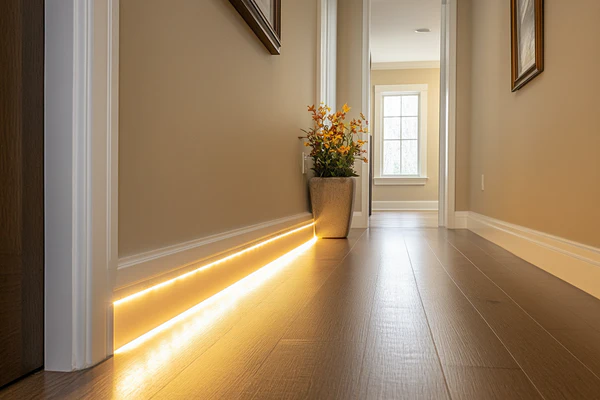
1. Along Baseboards (Hallways)
- Lights your exact walking path
- Eliminates floor shadows
- Creates a natural “guiding line.”
2. Under the Bed
- Immediate visibility when standing up
- No need for switches
- Smooth transition from sleep to movement
3. Near Stairs and Transitions
- Prevents missteps
- Improves depth perception
- Critical for safety
4. Bathroom Entry Points
- Soft light without waking your eyes
- Helps maintain nighttime comfort
Common Mistakes People Make (Google LOVES This Section)
Avoid these:
- Installing lights too high (causes glare)
- Using bright white (cool) lighting at night
- Choosing lights that stay on too long
- Leaving gaps between light zones
👉 The goal is continuous, low-level guidance, not brightness.
⇒ See Your Options for Motion Sensor Lighting for Home Safety
Choosing the Right Type of Motion Lighting
Here’s what works best:
| Lighting Type | Comfort | Best Use |
|---|---|---|
| LED motion strips | High | Hallways, baseboards |
| Under-bed lighting | Very high | Bed transitions |
| Plug-in lights | Moderate | Small spaces |
| Smart lighting | High | Full automation |
Simple Upgrades That Work Immediately
Start with:
- Rechargeable motion sensor LED strips
- Adhesive-backed lights (no tools needed)
- Warm light (2700K–3000K)
These can be installed in minutes and provide immediate improvement.
⇒ More Options for Motion Sensor Lighting for Home Safety
Creating a Seamless Night Path (Advanced Setup)
The best setup combines:
- Under-bed lighting → first step
- Hallway strip lighting → continuous path
- Stair lighting → transition safety
This creates a connected lighting experience, not isolated lights.
How This Improves Daily Life After 50
When motion sensor lighting for home safety is set up correctly:
- You stop reaching for switches
- You don’t pause to adjust your vision
- You move naturally—even at night
Your home starts working with you, not against you.
For more ways to reduce daily effort, see:
👉 How Your Home Setup Affects Daily Energy After 50
FAQ
What is motion sensor lighting for home safety?
Lighting that activates automatically when movement is detected, improving visibility without manual switches.
Where should it be installed?
Low positions like baseboards, under beds, and walkways.
Is warm light better than cool light?
Yes—warm light is less disruptive and easier on the eyes at night.
Do I need a full system?
No—small upgrades make a big difference.
Final Thoughts
Motion sensor lighting for home safety isn’t about brightness—it’s about precision.
When light appears exactly where you need it, movement becomes smooth, automatic, and comfortable again.
And once it’s in place, it quietly becomes part of how your home supports you—without effort, without interruption.
Small adjustments in lighting don’t just improve visibility—they reshape how comfortably you move through your home, even in the quietest hours of the night.
— Sam Ammouri
Some links in this article may be affiliate links, including links to Amazon and other partners. This means a small commission may be earned at no extra cost to you.