
A Kitchen That Feels Natural to Use
There’s something satisfying about moving through your kitchen when everything just works.
You reach for a cup without thinking. You turn on the faucet in one smooth motion. You prepare meals without adjusting your stance or second-guessing where things are stored. The space supports you, quietly, without effort.
Over time, though, you may notice that certain movements feel slightly different. Not difficult, not limiting—just less fluid than they used to be. You might shift your weight more often while standing, take an extra second before reaching into a cabinet, or adjust how you grip something.
That’s where kitchen ergonomics for aging in place comes in. It’s not about changing your habits—it’s about refining your environment so your daily routine continues to feel smooth, natural, and comfortable.
Why Kitchen Ergonomics for Aging in Place Makes a Real Difference
The kitchen is one of the most active spaces in your home.
You’re not just passing through it—you’re:
- Standing for extended periods
- Reaching, bending, and lifting repeatedly
- Using your hands constantly for small tasks
When your kitchen is aligned with how your body naturally moves, these actions feel effortless. When it’s not, your body starts making subtle adjustments.
You might not notice them at first.
But over days, weeks, and months, those adjustments become patterns.
The National Institute on Aging also highlights how home layout and daily movement patterns play a key role in maintaining comfort and independence over time.
What’s Really Happening in the Daily Kitchen Movement
Think about how often you repeat simple actions:
You reach into a lower cabinet multiple times a day.
You twist a faucet on and off without thinking.
You stand in one place while preparing food.
You lean slightly forward to see better under the overhead light.
None of these are problems.
But when they’re slightly inefficient, your body compensates.
- You bend a little more than necessary
- You grip tighter than needed
- You shift your stance to stay comfortable
- You adjust your posture to improve visibility
These are small changes—but they repeat constantly.
That repetition is what shapes how your kitchen feels.
What People Often Overlook
It’s rarely one big issue.
It’s the combination of:
- Small inconveniences
- Repeated movements
- Slight inefficiencies
Because each one feels minor, they’re easy to ignore.
But once you improve even one of these areas, you immediately notice how much smoother everything feels. And when multiple small improvements come together, the entire space feels different—lighter, easier, more supportive.
Practical Kitchen Ergonomic Upgrades That Work
1. D-Shaped Cabinet Handles
Cabinet knobs require pinching and twisting.
D-shaped handles allow you to pull naturally using your whole hand.
This changes how your hands interact with your kitchen throughout the day. Instead of applying pressure through your fingers, you use a more natural pulling motion.
Over time, that reduces effort without you even noticing it.
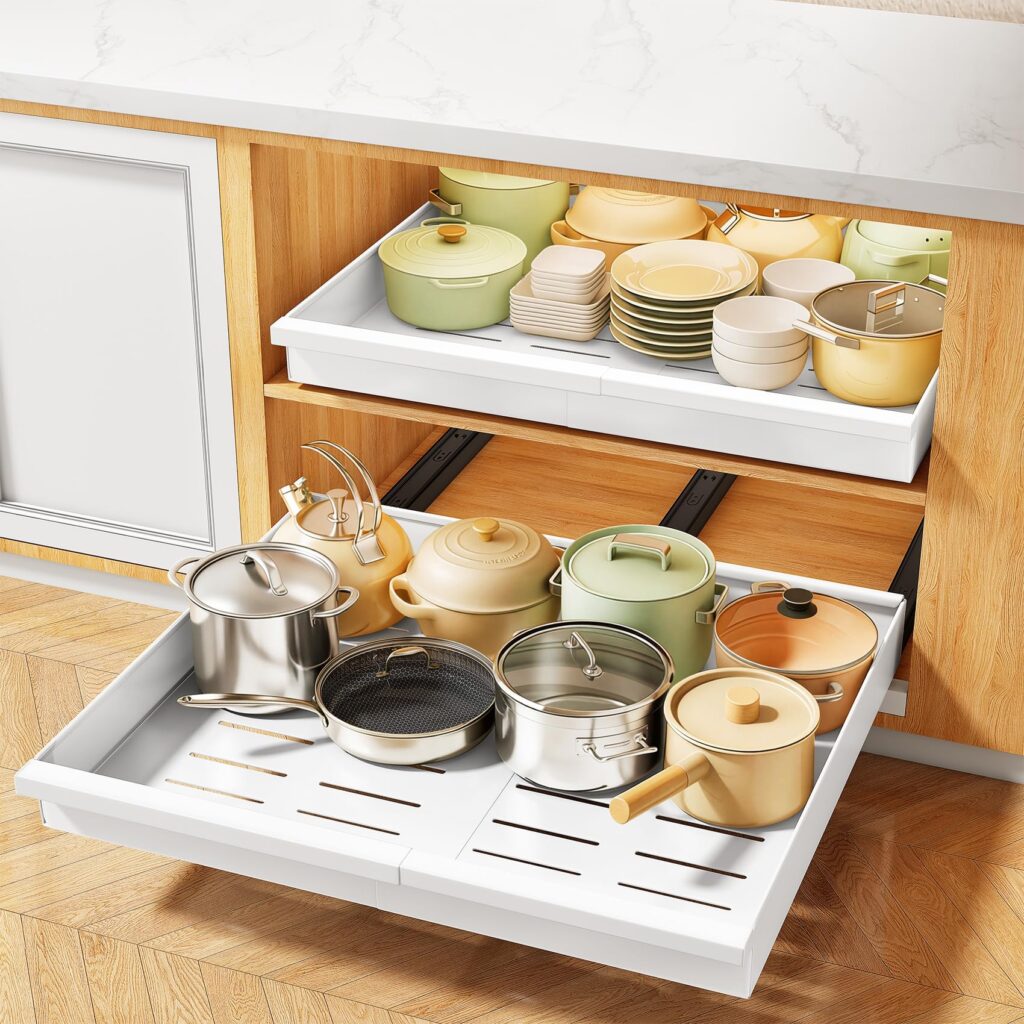
2. Pull-Out Shelves for Lower Cabinets
Lower cabinets often become the least convenient part of the kitchen.
Items get pushed to the back. You bend, reach, and search for what you need.
Pull-out shelves eliminate that.
Everything slides forward into view. You don’t have to reach deep or guess where things are. The movement becomes direct and efficient.
This single upgrade often has the biggest impact on daily comfort.
3. Lever-Style Faucets
Traditional faucets require grip and rotation.
A lever-style faucet works with a simple push or lift.
This aligns better with how your hand naturally moves, especially during repetitive use. Whether your hands are wet, busy, or slightly tired, the motion remains smooth and consistent.
4. Under-Cabinet Lighting
Overhead lighting lights the room—but not always your workspace.
That’s why you may find yourself leaning forward or adjusting your position while preparing food.
Under-cabinet lighting fixes this by placing light exactly where you need it.
The result is better visibility, less adjustment, and a more comfortable working position.
5. Anti-Fatigue Mats
Standing in one place for extended periods creates pressure on your joints.
You may not notice it immediately, but over time, you start shifting your weight or changing positions more often.
An anti-fatigue mat provides a cushioned surface that supports your stance.
It reduces pressure, improves comfort, and allows you to stand longer without needing constant adjustments.
Quick Comparison: Kitchen Ergonomics Upgrades
| Upgrade | Effort | Cost | Best For | Impact |
|---|---|---|---|---|
| D-pull handles | Very easy | Low | Grip comfort | Instant |
| Lever faucet | Easy | Low–Medium | Smooth control | High |
| Anti-fatigue mat | Instant | Low | Standing comfort | Immediate |
| Under-cabinet lighting | Easy | Low–Medium | Visibility | Moderate |
| Pull-out shelves | Moderate | Medium | Accessibility | Very High |
Recommended: Easy Comfort Upgrades
If you want to improve your kitchen without changing anything major, start with simple upgrades.
Many people choose matte or brushed D-pull handles because they’re easy to grip and blend into almost any kitchen style.
A thick anti-fatigue mat (around 3/4-inch cushioning) placed near the sink or prep area can noticeably improve comfort during daily tasks.
These changes don’t require planning or renovation—they simply make what you already do feel easier.
Recommended: Upgrades That Improve Daily Flow
For a more noticeable shift, focus on how you access and use your space.
Full-extension pull-out shelves allow everything in your cabinets to come forward smoothly, eliminating the need to reach deep or reposition yourself.
Pairing this with under-cabinet LED lighting creates a workspace that feels open, visible, and easier to navigate.
These upgrades don’t just improve comfort—they improve how your kitchen functions as a whole.
⇒ If you wish to see more options here
How This Connects to Everyday Living
When your kitchen supports natural movement, everything feels more fluid.
You don’t pause before reaching.
You don’t adjust your stance as often.
You don’t think about how to complete simple tasks.
You just move.
If you’ve noticed similar patterns in other areas of your home, you may also benefit from improving how your home environment supports daily movement and comfort.
❓ FAQ
What is kitchen ergonomics for aging in place?
It’s the idea of adjusting your kitchen to better support natural movement and reduce unnecessary effort.
Do I need a full remodel?
No. Most improvements can be made with simple upgrades.
Which upgrade has the biggest impact?
Pull-out shelves often provide the most noticeable improvement in daily use.
Are these changes expensive?
Many are affordable and can be done gradually.
How quickly will I notice results?
Most people notice improvements immediately, especially with smaller upgrades.
Final Thoughts
A well-functioning kitchen doesn’t draw attention to itself—it simply feels easy to use.
When your space supports how you naturally move, your routine becomes smoother without any extra effort. Small changes remove the need for constant adjustments, allowing everything to flow more naturally.
That’s what kitchen ergonomics for aging in place is really about. Not changing what you do, but improving how it feels while you do it.
And once those small improvements are in place, the difference becomes part of your everyday life—quiet, consistent, and lasting.
Small changes in your environment don’t just improve comfort—they quietly improve the way you move through your entire day.
— Sam Ammouri
Some links in this article may be affiliate links, including links to Amazon and other partners. This means a small commission may be earned at no extra cost to you.