
You run your hand through your hair… and notice more strands than usual. Maybe in the shower. Maybe on your pillow.
Or maybe just looking in the mirror. If you’ve been wondering why you’re losing so much hair after 50, you’re not alone. It’s one of the most common and frustrating changes people notice as they get older. The good news, there are clear reasons behind it—and simple ways to slow it down.
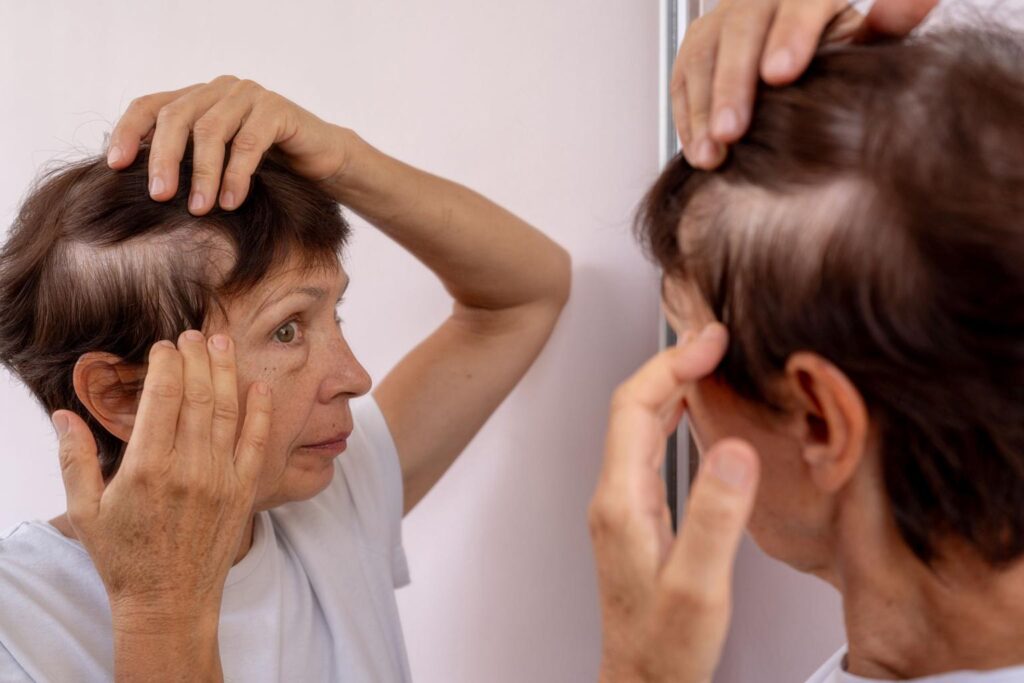
Why Am I Losing So Much Hair After 50?
Hair thinning after 50 is usually caused by hormonal changes, slower hair growth cycles, and reduced scalp circulation.
As the body changes:
- Hair grows more slowly
- Strands become thinner
- Shedding becomes more noticeable
It’s not sudden—it’s gradual. But once you notice it, it’s hard to ignore.
What’s Really Causing Hair Loss After 50?.
1. Hormonal Changes Play a Big Role
After 50, hormone levels shift significantly.
This can:
- Shorten the hair growth phase
- Increase shedding
- Lead to thinner strands
This is especially common during and after menopause—but it affects men too.
2. Hair Growth Naturally Slows Down
Your hair doesn’t grow the same way it did years ago.
The cycle becomes:
- Slower
- Shorter
- Less productive
So when hair falls out, it doesn’t grow back as quickly.
3. Reduced Blood Flow to the Scalp
Healthy hair depends on good circulation.
Over time:
- Blood flow to the scalp can decrease
- Hair follicles receive less oxygen and nutrients
That can weaken hair at the root.
This connects closely with what many people notice in Why Do My Feet Feel Cold Even When It’s Warm After 50?, where circulation changes affect how different parts of the body function and feel.
4. Daily Stress and Lifestyle Add Up
Even small things matter more now:
- Stress
- Poor sleep
- Lack of nutrients
They don’t always cause hair loss alone—but they can make it worse.
5. Your Hair Is Becoming More Sensitive
After 50, hair becomes:
- Finer
- More fragile
- Easier to shed
So what used to feel normal now feels more noticeable. But your hair isn’t suddenly “falling out.” It’s going through a slower, more delicate growth cycle. And that cycle can be supported.
Simple Ways to Slow Hair Thinning
1. Be Gentle With Your Hair
Avoid:
- Harsh brushing
- Tight hairstyles
- Excessive heat
Small changes can reduce breakage and shedding.
2. Support Your Body From Within
Hair health reflects overall health.
Focus on:
- Balanced nutrition
- Hydration
- Consistent sleep
3. Stimulate Your Scalp
Simple actions help:
- Gentle scalp massage
- Regular movement
- Improving circulation
This supports healthier hair growth over time.
4. Use Proven Hair Support Solutions
Some people find that targeted products make a noticeable difference.
Click items below if you wish to see your options at Amazon.
– Minoxidil topical treatments to support regrowth
– Hair thickening shampoos designed for aging hair
– Scalp massagers to improve circulation
– Nutrient-based hair support supplements
What Experts Say About Hair Loss After 50
According to the American Academy of Dermatology, hair thinning becomes more common with age due to changes in hormones and hair growth cycles. Early support and consistent care can help slow the process and improve hair appearance.
Why This Matters More Than You Think
Hair loss isn’t just physical.
It affects:
- Confidence
- Self-image
- How you feel day to day
And that’s why addressing it—even in small ways—matters.
Common Mistakes to Avoid
These habits can quietly make hair thinning worse:
- Ignoring early signs
- Using harsh products
- Expecting instant results
- Switching products too often
Consistency is key.
FAQ: Losing Hair After 50
Is it normal to lose more hair after 50?
Yes, it’s very common due to aging and hormonal changes.
Can hair grow back after thinning?
In many cases, yes—especially with consistent care and the right support.
Does stress cause hair loss?
It can contribute, especially when combined with other factors.
When should I be concerned?
If hair loss is sudden, patchy, or severe, it’s best to check with a professional.
You May Also Find Helpful
– Why Do I Feel Tired All the Time After 50? Causes and Simple Ways to Boost Energy
Final Thoughts
If you’re losing so much hair after 50, it doesn’t mean you’ve lost control.
It means your body is changing—and with the right support, you can respond to it.
Small, consistent habits can make a real difference over time.
“There is no problem that has no solution and no illness that has no medicine.”
— Sam Ammouri
Medical Disclaimer
This content is for informational purposes only and is based on general health knowledge and everyday experiences. It is not intended as medical advice, diagnosis, or treatment. Always consult a qualified healthcare professional if you have concerns about your health or symptoms.
Affiliate Disclaimer
Some of the links in this article may be affiliate links, which means a small commission may be earned if a purchase is made—at no additional cost to you. These are only suggested when they may genuinely help support comfort, daily habits, or overall well-being.